WE ARE THE AREA EXPERTS

We stand behind the "M".

ALL OUR AGENTS ARE SHORT SALE CERTIFIED

We are here for our customers... then, now, future... Serving South County for 50 years.

MCMILLIN REALTY

Proudly serving San Diego for 50 years.

THESE ARE CHALLENGING TIMES

Nobody gets the job done better... McMillin Realty.

RACING OR REALTY, ITS A TEAM THING!

And no one does either better than McMillin Realty, 50 years in the business. A Family Business!.

Thursday, December 17, 2009

Worried About Foreclosure?


Talk to a McMillin Realty Short Sale Specialist.

Take advantage of our FREE, NO-OBLIGATION consultation.

You don't need to pay for advice on your home needs, we can help. Do you have questions like, "What is a loan modification?, What is a short sale?, What is a deed in lieu of foreclosure?, What is forbearance?, What ARE the credit benefits of doing a short sale vs. foreclosure?"

McMillin Realty can help you. Call us today. 888-710-0050


Follow us on the Social Networks
Follow us on Twitter®Find us on Facebook®Visit our Blog
We Serve San Diego: San Diego Real Estate|Chula Vista Real Estate|Point Loma Real Estate|Eastlake Real Estate|Otay Ranch Real Estate|Downtown San Diego Real Estate|Carlsbad Real Estate|Rancho Bernardo Real Estate|4S Ranch Real Estate|Bonita Real Estate|La Jolla Real Estate|Imperial Beach Real Estate|Coronado Real Estate|

Friday, December 11, 2009

McMillin Realty To Spotlight Chula Vista In Dream Homes Magazine


For those of us that live and work in Chula Vista, we already know the amazing city we are fortunate enough to call home. Our homes are new and beautiful, our schools are state-of-the-art and California distinguished, our dining and shopping are growing and our community has been built with great attention to detail in the master plan. However, for those that do not travel down the South County path, Chula Vista is to them just another sleepy, old, border town, with run down homes, old schools, and abandoned shopping centers. They couldn't be more wrong.

McMillin Realty, with its commitment to community, will embark on an effort to showcase Chula Vista, and all of its gorgeous assets to the county, the state, the country, in collaboration with Dream Homes Magazine. "We want everyone else to know what we already know, South County is a great place to live. We have the same great amenities as Rancho Bernardo or Carlsbad, with two exceptions; our prices are better and we are closer to Downtown San Diego." says Director of Marketing, Liz Klaser. "I think the public will be amazed when they see what we have to offer down here, and what your money actually buys you as compared to other parts of the county."

The first issue is expected to hit newsstands in January.

McMillin Realty has been serving San Diego real estate for over 40 years.

Figuring Out What You Can Afford

In addition to your monthly mortgage payments, there are many things to factor in when determining how much you can afford, or even if you can afford to buy a home at all. There is a down payment for the loan, closing costs, moving expenses, plus purchases and maintenance for the new home. Generally, your annual gross income multiplied by 2.5 will give you an approximate amount for the price of home you can afford. It could vary depending on how much you have as a down payment, your debts, financial situation, and credit history/rating. Your debts, including alimony and child support, should not be more than 30 to 40% of your gross income.

Monthly Mortgage Payment
Lenders want to make sure you have the ability to pay your loan. As a general rule of thumb, you can figure that your monthly mortgage payment should be equal to or less than 25% of your gross monthly income. This also will vary depending on circumstances.

Amount of Money Needed
You will need money for a down payment and closing costs, plus any move related expenses and maintenance or repair costs for your home.

» Down Payment – Your down payment is a percentage of the property value and is usually from 3 to 20%, or more if you want a lower loan amount. This can vary by the type of mortgage you obtain. Also, if your down payment is less than 20%, you may be required to pay mortgage insurance (PMI or MI).

» Closing Costs – these are settlement costs involved in purchasing your home. They range from 2 to 7% of the property value and include such things as points (a percentage paid for securing a particular interest rate), financing fees, taxes, title insurance, pre-paid and escrow items, and your down payment. You will receive an estimate of these costs prior to closing.

McMillin Realty | We Serve San Diego: San Diego Real Estate|Chula Vista Real Estate|Point Loma Real Estate|Eastlake Real Estate|Otay Ranch Real Estate|Downtown San Diego Real Estate|Carlsbad Real Estate|Rancho Bernardo Real Estate|4S Ranch Real Estate|Bonita Real Estate|La Jolla Real Estate|Imperial Beach Real Estate|Coronado Real Estate|Clairemont Real Estate|Pacific Beach Real Estate

Follow us on the Social Networks
Follow us on Twitter®Find us on Facebook®Visit our Blog

Friday, December 4, 2009

Southland home sales up again, drop in median price smallest in 2 years

La Jolla, CA---Southern California home sales rose in October as prices showed more signs of firming. The median sale price fell by the smallest amount in two years, the result of a shrinking inventory of homes for sale and government and industry efforts to stoke demand and curtail foreclosures, a real estate information service reported.

Two counties – Orange and San Diego – posted modest year-over-year increases in their overall median sale price last month. It was the second consecutive gain for Orange County and the first in more than three years for San Diego. Both counties also posted small annual gains the past two months in their median price paid for resale single-family detached houses.

Last month 22,132 new and resale houses and condos closed escrow in Los Angeles, Riverside, San Diego, Ventura, San Bernardino and Orange counties. That was up 2.8 percent from 21,539 in September and also up 2.8 percent from 21,532 a year earlier, according to MDA DataQuick of San Diego.

October marked the 16th month in a row with a year-over-year sales gain, although last month’s was the smallest of those increases. The 2.8 percent uptick in October sales from September wasn’t unusual, given sales have increased between those two months in half of the years – including 2007 and 2008 – since 1988, when DataQuick’s statistics begin. The average change between September and October is a decline of just under 1 percent.

Last month’s sales were the highest for an October since 2006, when 23,745 sold, but were still 9.5 percent lower than the historical October average of 24,458 sales. Since 1988, October sales have ranged from a low of 12,913 in October 2007 to a high of 37,642 in October 2003.

Sales increases over the last two months can be partially attributed to the recent increase in short sales, which take longer to close escrow. The result is that some summer deals that might normally have closed earlier instead closed in September and October.

Other factors driving home sales higher of late: A rush by some to take advantage of the federal tax credit for first-time buyers, which was initially set to expire at the end of this month but was recently extended and expanded. Also, mortgage rates remain extremely attractive and, combined with home price declines, have boosted housing affordability.

A critical financing source for first-time buyers purchasing lower-cost homes, especially foreclosures, has been the federally-insured FHA loan. FHA mortgages accounted for 38.3 percent of all Southland purchase loans last month, compared with 32.5 percent a year ago and just 2 percent two years ago. FHA’s share of purchase loans varied last month from 26.2 percent in Orange County to 49.2 percent in Riverside County. They offer down payments as low as 3.5 percent and relatively lenient qualifying standards.

“The government is playing a huge role in stabilizing and, to some extent, reinvigorating the housing market,” said John Walsh, MDA DataQuick president. “Its actions have triggered ultra-low mortgage rates, plentiful low-down-payment (FHA) financing, an extended and expanded tax credit for home buyers, and programs and political pressure aimed at reducing foreclosures.”

“The real question now is how well can the market perform next year as some of the government stimulus disappears,” he continued. “The more upbeat outlooks suggest a strengthening economy and job market will help pick up the slack, and that demand for lower-cost foreclosures will remain robust. The more negative forecasts assume, among other things, a much slower economic recovery, more foreclosures than the market can readily digest, and more turbulence in the credit markets.”

The latter outlook suggests today’s market stability is contrived and will prove short-lived – nothing more than a temporary price plateau – while the former suggests home prices are currently at or near bottom.

In October, the median price paid for a Southland home was $280,000, up 1.8 percent from $275,000 in September but down 6.7 percent from $300,000 in October 2008. It was the median’s smallest annual decline for any month since September 2007, when the median fell 4 percent from a year earlier. September 2007 – one month after the current credit crunch hit – marked the beginning of a 26-month streak of year-over-year declines in the median price.

The region’s overall median sale price has risen or held steady on a month-to-month basis ever since it dropped to a more-than 7-year low of $247,000 in April. Last month the median was 44.6 percent lower than the peak $505,000 median reached during several months in early and mid 2007.

Orange County logged a 3.9 percent annual gain in its overall median last month and a 1.9 percent increase in its resale single-family house median. San Diego County saw a 0.5 percent annual increase in its overall median price and a 2.9 percent gain in its median for resale houses.

Another price gauge analysts watch, the median paid per square foot for resale single-family houses, has risen or held steady for the past six months. In October it was $170 for the six-county area, the same as in September but 9.5 percent lower than a year earlier. The figure hit a low this year of $147 in April.

Recent month-to-month and year-over-year gains in the median sale price reflect, in large part, a shift of late toward foreclosures representing a lower percentage of sales. It’s mainly the result of lenders and loan servicers increasingly steering distressed borrowers into either an attempted short sale or loan modification. This reduction in foreclosures is key because over the past two years foreclosed properties were often the most aggressively priced on the market.

Last month, foreclosure resales – houses and condos sold in October that had been foreclosed on in the prior 12 months – made up 40.6 percent of all Southland resales. That was up insignificantly from 40.4 percent in September and down from a high of 56.7 percent in February this year.

As sales of lower-cost foreclosures began to wane earlier this year, sales in higher-cost neighborhoods picked up. High-end homes began to account for a greater share of all sales and helped reverse the steep slide in the median price. Over the past few months, however, the high-end’s share of total sales has flattened out.

In October, sales of homes priced $500,000 and above fell to 18.5 percent of all sales, up from a low this year in April of 13.4 percent but down from 20.2 percent in September and 19.6 percent a year earlier. In October 2007, $500,000-plus sales were 41.1 percent of all sales.

Availability of financing for pricier homes appeared to improve in recent months, but the “jumbo” loans that many high-end buyers require remain relatively expensive and difficult to obtain.

Mortgages above $417,000 – formerly the definition of a jumbo loan – made up nearly 40 percent of purchases before the August 2007 credit crunch hit. Last month they accounted for 15.1 percent, the same as in September but up from 13.3 percent a year ago and a 2009 low of 9.3 percent in January.

MDA DataQuick is a division of MDA Lending Solutions, a subsidiary of Vancouver-based MacDonald Dettwiler and Associates. DataQuick monitors real estate activity nationwide and provides information to consumers, educational institutions, public agencies, lending institutions, title companies and industry analysts.

The typical monthly mortgage payment that Southland buyers committed themselves to paying was $1,196 last month, up from $1,189 for September, and down from $1,470 in October a year ago. Adjusted for inflation, current payments were 46.0 percent below typical payments in the spring of 1989, the peak of the prior real estate cycle. They were 55.8 percent below the current cycle’s peak in July 2007.

Indicators of market distress continue to move in different directions. Foreclosure activity remains high by historical standards, although mortgage default notices have flattened out or trended lower in many areas lately. Financing with multiple mortgages is low, down payment sizes are stable, and non-owner occupied buying is above-average in some markets, MDA DataQuick reported.


Source: DQNews.com Media calls: Andrew LePage (916) 456-7157 or John Karevoll (909) 867-9534

McMillin Relocation can help you move to, from and around California

Providing services for Corporations and Individuals, we take the stress out of finding the right neighborhood and the right home for your family.

McMillin Relocation is a member of Leading Real Estate Companies of the World® the country's largest network of leading independent residential real estate firms. This gives our clients relocation services across the United States and nearly 700 firms with 5,500 offices and 170,000 associates in 38 counties.


RELOHomeSearch.com is a community research tool that you can use to find information about cities, neighborhoods, zip code areas, etc. To recieve an instant cost-of-living analysis, be able to research home sale and other community statistics, and find relevant properties for sale listed by our members. Once you click on a member property listing, logo, or company name link, you are taken directly to our members' websites where you can view full-market coverage.If you're moving to a new area, you need a qualified real estate agent in your destination city. Our agents live and work in the neighborhoods they serve, and they're closely involved in their communities. They know about available homes, neighborhood characteristics, schools, shopping, traffic patterns and social activities – all the information a new neighbor would need.

McMillin Realty was started over 40 years ago by Corky McMillin with one mission in mind; to be the best real estate company in San Diego. We were built on principles that Corky stood behind; integrity, reputation, respect, knowledge of the industry and a desire to give his clients the best service possible. That mission stands just as strong today as it did 40 years ago. We take pride in our employees, sales people and work ethic. We value our clients and their families, just as we value our own.


Thursday, December 3, 2009

Biggest Losers: 20 Home Design Features That Send Buyers Running


Design glitches draw attention away from a home’s best features. Don’t let out-of-date fixtures and unappealing decor cost you a sale. While some buyers may actually appreciate “vintage” features, home and design experts say these 20 features almost always serve as a turnoff.

1. Dated and excessively bold or dark paint and tile colors, such as “Pepto Bismol” pink, avocado green, deep plum, or jet black. “Dark can be cool, but it has to be a color that’s popular today,” says sales associate Gloria Holland, of McMillin Realty in Chula Vista.

2. Lacquered or high-gloss painted walls that are expensive to repaint and show all defects. Likewise, faux- and sponge-painted walls can be so passe.

3. Painted trim that’s very dark-and costly to remove.

4. Wallpaper, which is a lot of work (and potentially expensive) to remove. Most disliked: Dated flowered or striped patterns.

5. Kitchens that lack any dining space. Also, outdated, small-scale, and dirty kitchen appliances that look like they won’t perform.

6. Worn, cracked laminate countertops, and backsplashes or plastic cultured marble.

7. Outdated bathrooms with small sinks, short toilets, squatty bathtubs, and tight showers-all of which aren’t conducive to unwinding after a long day’s work, says Ames.

8. Lack of ample closet space in bedrooms, or no closet at all and no place to build one or add an armoire.

9. Dens, libraries, and family rooms without built-in bookcases or a space to include shelves.

10. Stained and worn wall-to-wall carpet in rooms or on stairs. Worst choice: shag. Also, worn linoleum that suggests a house was never updated.

11. Poorly built additions that don’t blend with a home’s architecture, such as a sunroom with tinted glass.

12. Shortage of windows or very small windows, which makes a home feels dark and gloomy.

13. Ceilings with so many recessed lighting spots that they resemble Swiss cheese and are expensive to remove. Worst offenders: big 6-inch diameter lights.

14. Too many rooms outside the kitchen and bathroom that have cold ceramic tiled floors.

15. Children’s bedrooms with a theme that runs through the carpeting, wallpaper, murals, ceilings, light fixtures, curtains, and furnishings.

16. Homes without a foyer or garage.

17. Too many mirrored walls, ceilings, doors, and backsplashes in a single room. The effect is dizzying, Ames says. One mirror magnifies, but many cheapen the look.

18. Skimpy molding and trim, such as 1-inch baseboards.

19. Noisy, grinding fan in a bathroom that’s attached to a light switch so it can’t be turned off.

20. Inexpensive gold-colored light fixtures in any room. Also, Hollywood-style lighting with huge bulbs in a bathroom is also out of date, design experts say.

Wednesday, December 2, 2009

7 Smart Strategies for Remodeling Your Kitchen


When planning a kitchen remodeling project, keep the same footprint, add storage, and design adequate lighting to preserve value and keep costs on track.

If you’re contemplating a kitchen remodel, you’re also weighing a considerable investment. But a significant portion of the upfront costs may be recovered by the value the project brings to your home. Kitchen remodels in the $50,000 range recouped 76% of the initial project cost at the home’s resale, according to recent data from Remodeling magazine’s Cost vs. Value Report. To make sure you maximize your return, consider these seven smart kitchen remodeling strategies.

1. Establish your priorities

Simple enough? Not so fast. The National Kitchen and Bath Association (NKBA) recommends spending at least six months planning before beginning the work. That way, you can thoroughly evaluate your priorities and won’t be tempted to change your mind during construction. Contractors often have clauses in their contracts that specify additional costs for amendments to original plans. Planning points to consider include:

  • Avoid traffic jams. A walkway through the kitchen should be at least 36 inches wide, according to the NKBA. Work aisles for one cook should be a minimum of 42 inches wide and at least 48 inches wide for households with multiple cooks.
  • Consider children. Avoid sharp, square corners on countertops, and make sure microwave ovens are installed at the heights recommended by the NKBA—3 inches below the shoulder of the principle user but not more than 54 inches from the floor.
  • Access to the outside. If you want to easily reach entertaining areas, such as a deck or a patio, factor a new exterior door into your plans.

Because planning a kitchen is complex, consider hiring a professional designer. A pro can help make style decisions and foresee potential problems, so you can avoid costly mistakes. In addition, a pro makes sure contractors and installers are sequenced properly so that workflow is cost-effective. Expect fees around $50 to $150 per hour, or 5% to 15% of the total cost of the project.

2. Keep the same footprint

No matter the size and scope of your planned kitchen, you can save major expense by not rearranging walls, and by locating any new plumbing fixtures near existing plumbing pipes. Not only will you save on demolition and reconstruction, you’ll greatly reduce the amount of dust and debris your project generates.

3. Match appliances to your skill level

A six-burner commercial-grade range and luxury-brand refrigerator might make eye-catching centerpieces, but be sure they fit your lifestyle, says Molly Erin McCabe, owner of A Kitchen That Works design firm in Bainbridge Island, Wash. “It’s probably the part of a kitchen project where people tend to overspend the most.”

The high price is only worth the investment if you’re an exceptional cook. Otherwise, save thousands with trusted brands that receive high marks at consumer review websites, like www.ePinions.com and www.amazon.com, and resources such as Consumer Reports.

4. Create a well-designed lighting scheme

Some guidelines:

  • Install task lighting, such as recessed or track lights, over sinks and food prep areas; assign at least two fixtures per task to eliminate shadows. Under-cabinet lights illuminate clean-up and are great for reading cookbooks. Pendant lights over counters bring the light source close to work surfaces.
  • Ambient lighting includes flush-mounted ceiling fixtures, wall sconces, and track lights. Consider dimmer switches with ambient lighting to control intensity and mood.

5. Focus on durability

“People are putting more emphasis on functionality and durability in the kitchen,” says McCabe. That may mean resisting bargain prices and focusing on products that combine low-maintenance with long warranty periods. “Solid-surface countertops [Corian, Silestone] are a perfect example,” adds McCabe. “They may cost a little more, but they’re going to look as good in 10 years as they did the day they were installed.”


If you’re not planning to stay in your house that long, products with substantial warranties can become a selling point. “Individual upgrades don’t necessarily give you a 100% return,” says Frank Gregoire, a real estate appraiser in St. Petersburg, Fla. “But they can give you an edge when it comes time to market your home for sale” if other for-sale homes have similar features.

6. Add storage, not space

To add storage without bumping out walls:

  • Specify upper cabinets that reach the ceiling. They may cost a bit more, but you’ll gain valuable storage space. In addition, you won’t have to worry about dusting the tops.
  • Hang it up. Install small shelving units on unused wall areas, and add narrow spice racks and shelves on the insides of cabinet doors. Use a ceiling-mounted pot rack to keep bulkier pots and pans from cluttering cabinets. Add hooks to the backs of closet doors for aprons, brooms, and mops.

7. Communicate effectively—and often

Having a good rapport with your project manager or construction team is essential for staying on budget. “Poor communication is a leading cause of kitchen projects going sour,” says McCabe. To keep the sweetness in your project:

  • Drop by the project during work hours as often as possible. Your presence assures subcontractors and other workers of your commitment to getting good results.
  • Establish a communication routine. Hang a message board on-site where you and the project manager can leave each other daily communiques. Give your email address and cell phone number to subs and team leaders.
  • Set house rules. Be clear about smoking, boom box noise levels, which bathroom is available, and where workers should park their vehicles.

Consumers spend more money on kitchen remodeling than any other home improvement project, according to the Home Improvement Research Institute, and with good reason. They’re the hub of home life, and a source of pride. With a little strategizing, you can ensure your new kitchen gives you years of satisfaction.

John Riha has written six books on home improvement and hundreds of articles on home-related topics. He’s been a residential builder, the editorial director of the Black & Decker Home Improvement Library, and the executive editor of Better Homes and Gardens magazine. His standard 1968 suburban house has been an ongoing source of maintenance experience.

Why Use a REALTOR®

young couple with REALTOR

Many consumers consider selling their home directly but eventually turn to REALTORS®. Smart home sellers realize they need the expertise in pricing their home, making connections with REALTORS® working with buyers, arranging and staffing open houses, and coordinating with other professionals in the sales process.

Only about half of all real estate agents are REALTORS® - the top half, in our not-so-humble opinion. REALTORS® work independently, for small agencies, or for large brokerages. They help people buy and sell residential or commercial properties, vacation homes, and land; they conduct appraisals; they operate in the United States and in other countries; some specialize in auctions; and others are buyer's representatives.

REALTORS® Are Experts

Eighty-five percent of sellers were assisted by a real estate agent when selling their home, according to NAR Research, and 79 percent of buyers purchased their home through a real estate agent or broker.


Why Use a REALTOR®?
Real estate transactions involve one of the biggest financial investments most people experience in their lifetime. Here are 12 ways a REALTOR® will make your home buying or selling experience better.

1. Your REALTOR® can help you determine your buying power -- that is, your financial reserves plus your borrowing capacity. If you give a REALTOR® some basic information about your available savings, income and current debt, he or she can refer you to lenders best qualified to help you. Most lenders -- banks and mortgage companies -- offer limited choices.

2. Your REALTOR® has many resources to assist you in your home search. Sometimes the property you are seeking is available but not actively advertised in the market, and it will take some investigation by your agent to find all available properties.

3. Your REALTOR® can assist you in the selection process by providing objective information about each property. Agents who are REALTORS® have access to a variety of informational resources. REALTORS® can provide local community information on utilities, zoning. schools, etc. There are two things you'll want to know. First, will the property provide the environment I want for a home or investment? Second, will the property have resale value when I am ready to sell?

4. Your REALTOR® can help you negotiate. There are myriad negotiating factors, including but not limited to price, financing, terms, date of possession and often the inclusion or exclusion of repairs and furnishings or equipment. The purchase agreement should provide a period of time for you to complete appropriate inspections and investigations of the property before you are bound to complete the purchase. Your agent can advise you as to which investigations and inspections are recommended or required.

5. Your REALTOR® provides due diligence during the evaluation of the property. Depending on the area and property, this could include inspections for termites, dry rot, asbestos, faulty structure, roof condition, septic tank and well tests, just to name a few. Your REALTOR® can assist you in finding qualified responsible professionals to do most of these investigations and provide you with written reports. You will also want to see a preliminary report on the title of the property. Title indicates ownership of property and can be mired in confusing status of past owners or rights of access. The title to most properties will have some limitations; for example, easements (access rights) for utilities. Your REALTOR®, title company or attorney can help you resolve issues that might cause problems at a later date.

6. Your REALTOR® can help you in understanding different financing options and in identifying qualified lenders.

7. Your REALTOR® can guide you through the closing process and make sure everything flows together smoothly.

8. When selling your home, your REALTOR® can give you up-to-date information on what is happening in the marketplace and the price, financing, terms and condition of competing properties. These are key factors in getting your property sold at the best price, quickly and with minimum hassle.

9. Your REALTOR® markets your property to other real estate agents and the public. Often, your REALTOR® can recommend repairs or cosmetic work that will significantly enhance the salability of your property. Your REALTOR® markets your property to other real estate agents and the public. In many markets across the country, over 50% of real estate sales are cooperative sales; that is, a real estate agent other than yours brings in the buyer. Your REALTOR® acts as the marketing coordinator, disbursing information about your property to other real estate agents through a Multiple Listing Service or other cooperative marketing networks, open houses for agents, etc. The REALTOR® Code of Ethics requires REALTORS® to utilize these cooperative relationships when they benefit their clients.

10. Your REALTOR® will know when, where and how to advertise your property. There is a misconception that advertising sells real estate. The NATIONAL ASSOCIATION OF REALTORS® studies show that 82% of real estate sales are the result of agent contacts through previous clients, referrals, friends, family and personal contacts. When a property is marketed with the help of your REALTOR®, you do not have to allow strangers into your home. Your REALTOR® will generally prescreen and accompany qualified prospects through your property.

11. Your REALTOR® can help you objectively evaluate every buyer's proposal without compromising your marketing position. This initial agreement is only the beginning of a process of appraisals, inspections and financing -- a lot of possible pitfalls. Your REALTOR® can help you write a legally binding, win-win agreement that will be more likely to make it through the process.

12. Your REALTOR® can help close the sale of your home. Between the initial sales agreement and closing (or settlement), questions may arise. For example, unexpected repairs are required to obtain financing or a cloud in the title is discovered. The required paperwork alone is overwhelming for most sellers. Your REALTOR® is the best person to objectively help you resolve these issues and move the transaction to closing (or settlement).

Monday, November 30, 2009

FSBO Woes: Why It's So Hard to Sell Your Own Home

For most people, a for-sale-by-owner transaction simply isn't in the cards

Granted, some people are able to sell their own homes without the services of a real estate agent. Some of these successful do-it-yourselfers are very experienced home sellers. Others are transferring ownership of their home to a child, a coworker or a tenant who's already living in the home. These circumstances are the exception, not the norm, however. For most people, a for-sale-by-owner (FSBO) transaction simply isn't in the cards. Here are five reasons why.

1. FSBOs can't list their home in the MLS. FSBOs aren't permitted to put their home in the multiple listing service (MLS) because these industry membership organizations are open only to licensed real estate brokers and agents. FSBOs are also locked out of many home search engines and Web sites, including the gigantic Realtor.com. Sure, a determined FSBO can put a for-sale sign in his or her front yard and run a tiny advertisement in the local newspaper, but the home won't receive nearly as much exposure as it would through the MLS.

2. Agents won't show FSBO homes. In a typical home sale, the buyer's agent receives a percentage of the commission that the seller pays the listing agent. Without a listing agreement, there's no guarantee that the buyer's agent will be compensated for his or her services, unless the buyer has signed a buyer's brokerage agreement that specifically provides for such compensation. Even if a FSBO offers to pay the buyer's side of the commission, most agents won't want to go through a transaction with an unsophisticated self-represented seller across the table. That means the pool of potential buyers for FSBO homes is limited primarily to unrepresented and probably unqualified prospects.

3. FSBOs usually overprice their home. Like most homeowners, most FSBOs honestly believe their own home is worth more than comparable homes in the same neighborhood. Usually, they're wrong. A real estate agent can provide an update on market conditions, an assessment of the likely selling price of the home and tips for improving the home's buyer appeal. Overpricing a for-sale home is a sure way to deter potential buyers.

4. Buyers will feel intimidated. Potential buyers will spend less time in a for-sale home if the owner is present during the showing, and they'll be shy about discussing its pluses and minuses with their own agent if the owner is within earshot. Buyers will also be less inclined to make an offer if they know they'll be negotiating directly with the seller. Having an agent on each side creates an effective emotional buffer between the seller and buyer.

5. FSBOs are likely to stumble into legal trouble. Real estate transactions are fraught with potential liability for unwary sellers, particularly in states that have extensive disclosure requirements (such as California). A FSBO who overlooks even one required form or legally mandated disclosure could face a protracted and expensive buyer lawsuit after the transaction closes.

McMillin Realty has dedicated, professionals that work and live in South County. They are experts in your market. When thinking about selling your home, contact the neighborhood leader in real estate - www.mcmillinrealty.com

McMillin Realty | We Serve San Diego: San Diego Real Estate|Chula Vista Real Estate|Point Loma Real Estate|Eastlake Real Estate|Otay Ranch Real Estate|Downtown San Diego Real Estate|Carlsbad Real Estate|Rancho Bernardo Real Estate|4S Ranch Real Estate|Bonita Real Estate|La Jolla Real Estate|Imperial Beach Real Estate|Coronado Real Estate|Clairemont Real Estate|Pacific Beach Real Estate

Wednesday, November 25, 2009

Existing-Home Sales Record Another Big Gain, Inventories Continue to Shrink

Now is the time to SELL!!!

Washington, November 23, 2009

Driven by the first-time buyer tax credit, existing-home sales showed another big gain in October with a strong uptrend established over the past seven months, while inventories continue to decline, according to the National Association of Realtors®.

Existing-home sales – including single-family, townhomes, condominiums and co-ops – surged 10.1 percent to a seasonally adjusted annual rate of 6.10 million units in October from a downwardly revised pace of 5.54 million in September, and are 23.5 percent above the 4.94 million-unit level in October 2008. Sales activity is at the highest pace since February 2007 when it hit 6.55 million.

Lawrence Yun, NAR chief economist, was surprised at the size of the gain. “Many buyers have been rushing to beat the deadline for the first-time buyer tax credit that was scheduled to expire at the end of this month, and similarly robust sales may be occurring in November,” he said. “With such a sale spike, a measurable decline should be anticipated in December and early next year before another surge in spring and early summer.”

Now that the tax credit has been extended and expanded, potential buyers have until April 30 to have a contract in place. “There is still a large pent-up demand that can be tapped before the tax credit expires. Our recent consumer survey further shows that 13 percent of successful first-time buyers had a previous contract that was cancelled or fell through – there likely are many more buyers who were attempting to purchase but simply ran out of time,” Yun said.

Historically low interest rates also are boosting the market. “Mortgage interest rates last month were the third lowest on record dating back to 1971,” Yun noted. According to Freddie Mac, the national average commitment rate for a 30-year, conventional, fixed-rate mortgage fell to 4.95 percent in October from 5.06 percent in September; the rate was 6.20 percent in October 2008. Last week, Freddie Mac reporter the 30-year rate dropped to 4.83 percent.

NAR President Vicki Cox Golder, owner of Vicki L. Cox & Associates in Tucson, Ariz., said strong demand by first-time buyers is creating some unusual conditions. “In parts of the country, especially in Southwestern states but also in Florida and suburban Washington, D.C., we’ve been getting many reports of multiple bids in the lower price ranges with foreclosed properties getting absorbed quickly,” she said.

“In fact, low-end inventory has become very tight in many areas and in some cases buyers are becoming more aggressive. In this kind of environment it’s important to work with a Realtor® who can walk you through the process and help you negotiate a satisfactory deal,” Golder said.

Total housing inventory at the end of October fell 3.7 percent to 3.57 million existing homes available for sale, which represents a 7.0-month supply at the current sales pace, down from an 8.0-month supply in September. Unsold inventory totals are 14.9 percent below a year ago.

“The supply of homes on the market is now at the lowest level in over two-and-a half years – we’re getting closer to a general balance between buyers and sellers,” Yun said. The last time the relative housing inventory was this low was in February 2007 when it also was at a 7.0-month supply.

What does this mean to you? If you are on the fence about selling your home, NOW IS THE TIME!!! Buyers are out there, inventory is low, it is a seller's market! Call a McMillin Realty associate today! They are experienced in this type of market and in your community. Know one knows better - www.mcmillinrealty.com McMillin Realty also has a fully staffed Short Sale department to assist you if you are in need. www.CallScottForHelp.com

source of information: Realtor.org (National Association of Realtors)

McMillin Realty | A Corky McMillin Company , San Diego, CA , P:866-694-6491 We Serve San Diego: San Diego Real Estate|Chula Vista Real Estate|Point Loma Real Estate|Eastlake Real Estate|Otay Ranch Real Estate|Downtown San Diego Real Estate|Carlsbad Real Estate|Rancho Bernardo Real Estate|4S Ranch Real Estate|Bonita Real Estate|La Jolla Real Estate|Imperial Beach Real Estate|Coronado Real Estate|Clairemont Real Estate|Pacific Beach Real Estate

The Best iPhone Real Estate App

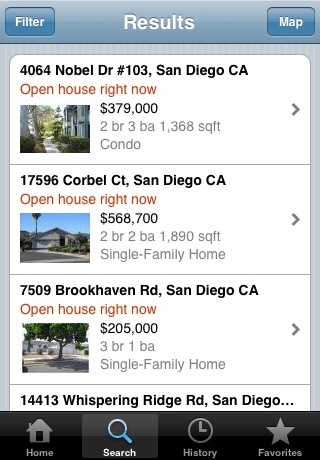
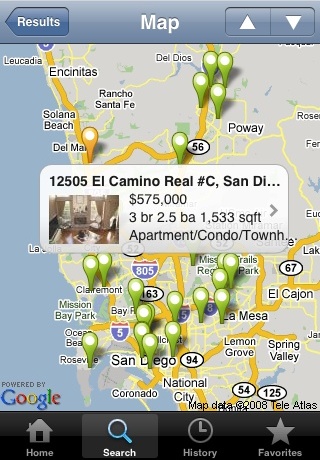
Everything great about the iPhone comes alive with the Trulia app. Use your iPhone to search all homes for sale near you, find nearby open houses after Sunday brunch, or daydream about your favorite beachfront getaway. Scroll through the color photos or see results on a local map. See full property details and then get directions from Google. It's just that easy and it's free! It works great on the iPhone 3G, the original iPhone and the iPod touch. Your home buying experience will never be the same.

Trulia on your Phone
Find homes for sale near you

Automatically find homes for sale near you.

iPhone knows your location and finds the homes near you
See the property highlights in the search results
Edit your search and filter the homes directly from the results screen


Trulia on your PhoneGet the details for every property

You get all the important details that you need.

See a color photo and read the full description
Get the Open House times and dates
See the property on a full screen map


Trulia on your Phone
Other cool features

Other features include.

Flip through the properties on an interactive map
Get driving directions from Google maps
Save the properties you’re interested in to your iPhone


Demo Video


McMillin Realty | A Corky McMillin Company , San Diego, CA , P:866-694-6491

We Serve San Diego: San Diego Real Estate|Chula Vista Real Estate|Point Loma Real Estate|Eastlake Real Estate|Otay Ranch Real Estate|Downtown San Diego Real Estate|Carlsbad Real Estate|Rancho Bernardo Real Estate|4S Ranch Real Estate|Bonita Real Estate|La Jolla Real Estate|Imperial Beach Real Estate|Coronado Real Estate|Clairemont Real Estate|Pacific Beach Real Estate

Monday, November 23, 2009

Buying a Home 101 part 3

Getting the money right

For most people, buying a house involves a double financial whammy.

First you have to assemble a pile of cash for the down payment and closing costs. Then you must convince a bank to lend you an even more staggering sum - generally 80 percent or more of the purchase price.

So your first step, even before you start the actual hunt for a property, should be to get your financial house in order.

Start with your credit


Credit reports are kept by the three major credit agencies, Experian, Equifax, and TransUnion. Among other things, they show whether you are habitually late with payments and whether you have run into serious credit problems in the past.

A credit score is a number calculated from a formula created by Fair Isaac based on the information in your credit report. You have three different credit scores, one for each of your credit reports.

A low credit score may hurt your chances for getting the best interest rate, or getting financing at all. So get a copy of your reports and know your credit scores. Try Fair Isaac's MyFICO.com, which charges $15.95 each for reports and scores from Equifax and TransUnion. Experian scores and reports can be accessed from experian.com and cost $15.

Errors are not uncommon. If you find any, you must contact the agencies directly to correct them, which can take two or three months to resolve. If the report is accurate but shows past problems, be prepared to explain them to a loan officer.

Know what you can afford


Next, you need to determine how much house you can afford. You can start with one of the Web's many calculators. For a more accurate figure, ask to be pre-approved by a lender, who will look at your income, debt and credit to determine the kind of loan that's in your league.

The rule of thumb here is to aim for a home that costs about two-and-a-half times your gross annual salary. If you have significant credit card debt or other financial obligations like alimony or even an expensive hobby, then you may need to set your sights lower.

Another rule of thumb: All your monthly home payments should not exceed 36 percent of your gross monthly income.

The size of your down payment will also determine how much you can afford.

Line up cash

If you haven't already, you'll need to come up with cash for your down payment and closing costs. Lenders like to see 20 percent of the home's price as a down payment. If you can put down more than that, the lender may be willing to approve a larger loan. If you have less, you'll need to find loans that can accommodate you.

Various private and public agencies - including Fannie Mae, Freddie Mac, the Federal Housing Administration, and the Department of Veterans Affairs - provide low down payment mortgages through banks and mortgage companies. If you qualify, it's possible to pay as little as 3 percent up front. For more, check out their Web sites at Fanniemae.com or Freddiemac.com.

A warning: With a down payment under 20 percent, you will probably wind up having to pay for private mortgage insurance, a safety net protecting the bank in case you fail to make payments. PMI adds about 0.5 percent of the total loan amount to your mortgage payments for the year. So if you finance $200,000, your PMI will cost $1,000 annually.

Once you've considered the down payment, make sure you've got enough to cover fees and closing costs. These may include the appraisal fee, loan fees, attorney's fees, inspection fees, and the cost of a title search. They can easily add up to more than $10,000 - and often run to 5 percent of the mortgage amount.

If your available cash doesn't cover your needs, you have several options. First-time homebuyers can withdraw up to $10,000 without penalty from an Individual Retirement Account, if you have one, though you must pay taxes on the amount. You can also receive a cash gift of up to $13,000 a year (the limit for 2009) from each of your parents without triggering a gift tax.

Gift taxes are paid by the donor, not the recipient. (In fact, if your and your spouse's parents are both well-heeled, they can give you a total of $104,000 in one year - $13,000 from each of the four parents to each of you.)

Check on whether your employer can help; some big companies will chip in on the down payment or help you get a low-interest loan from selected lenders. You can also tap a 401(k) or similar retirement plan for a loan from yourself.


McMillin Realty | A Corky McMillin Company , San Diego, CA , P:866-694-6491 We Serve San Diego: San Diego Real Estate|Chula Vista Real Estate|Point Loma Real Estate|Eastlake Real Estate|Otay Ranch Real Estate|Downtown San Diego Real Estate|Carlsbad Real Estate|Rancho Bernardo Real Estate|4S Ranch Real Estate|Bonita Real Estate|La Jolla Real Estate|Imperial Beach Real Estate|Coronado Real Estate|Clairemont Real Estate|Pacific Beach Real Estate

Buying a Home 101 part 2

Are you ready to own?

Home ownership means you no longer pay monthly rent for the roof over your head. You can do what you want with your house (within reason). When you leave, you can sell it to recoup the purchase price and - with any luck - earn a profit too.

But don't kid yourself. Home ownership comes with a slew of disadvantages, responsibilities, and downright headaches.

So before going any further, consider whether your lifestyle and finances make home buying a smart move.

TIP: High costs mean you should be prepared to stay put. Except in a roaring real estate market, it usually doesn't make sense to buy a home you'll own for less than three or four years. Reason: the high transaction cost of buying and selling property means you could lose money on the deal. If you do make money, you'll pay capital gains taxes if you're in the house less than two years.

When home prices are falling, it just makes the case against buying even stronger. So ask yourself if you can really stay put for that long. Will you need to move because you are transferred by your current employer or a new one? Are you thinking of going back to school?

TIP: It may make more sense to rent On the financial side, one key question is whether it costs more, on average, to rent or own in your area. The rule of thumb is that if you pay 35 percent less in rent than you would for owning - including the monthly mortgage, property taxes, and any homeowner's fees - then it's smarter to continue renting.

Only if all those answers still point towards owning should you proceed to the next step - getting the money right.

McMillin Realty | A Corky McMillin Company , San Diego, CA , P:866-694-6491 We Serve San Diego: San Diego Real Estate|Chula Vista Real Estate|Point Loma Real Estate|Eastlake Real Estate|Otay Ranch Real Estate|Downtown San Diego Real Estate|Carlsbad Real Estate|Rancho Bernardo Real Estate|4S Ranch Real Estate|Bonita Real Estate|La Jolla Real Estate|Imperial Beach Real Estate|Coronado Real Estate|Clairemont Real Estate|Pacific Beach Real Estate

Buying a Home 101 part 1

Top things to know

1. Don't buy if you can't stay put.

If you can't commit to remaining in one place for at least a few years, then owning is probably not for you, at least not yet. With the transaction costs of buying and selling a home, you may end up losing money if you sell any sooner - even in a rising market. When prices are falling, it's an even worse proposition.

2. Start by shoring up your credit.

Since you most likely will need to get a mortgage to buy a house, you must make sure your credit history is as clean as possible. A few months before you start house hunting, get copies of your credit report. Make sure the facts are correct, and fix any problems you discover.

3. Aim for a home you can really afford.

The rule of thumb is that you can buy housing that runs about two-and-one-half times your annual salary. But you'll do better to use one of many calculators available online to get a better handle on how your income, debts, and expenses affect what you can afford.

4. If you can't put down the usual 20 percent, you may still qualify for a loan.

There are a variety of public and private lenders who, if you qualify, offer low-interest mortgages that require a down payment as small as 3 percent of the purchase price.

5. Buy in a district with good schools.

In most areas, this advice applies even if you don't have school-age children. Reason: When it comes time to sell, you'll learn that strong school districts are a top priority for many home buyers, thus helping to boost property values.

6. Get professional help.

Even though the Internet gives buyers unprecedented access to home listings, most new buyers (and many more experienced ones) are better off using a professional agent. Look for an exclusive buyer agent, if possible, who will have your interests at heart and can help you with strategies during the bidding process.

7. Choose carefully between points and rate.

When picking a mortgage, you usually have the option of paying additional points -- a portion of the interest that you pay at closing -- in exchange for a lower interest rate. If you stay in the house for a long time -- say three to five years or more -- it's usually a better deal to take the points. The lower interest rate will save you more in the long run.

8. Before house hunting, get pre-approved.

Getting pre-approved will you save yourself the grief of looking at houses you can't afford and put you in a better position to make a serious offer when you do find the right house. Not to be confused with pre-qualification, which is based on a cursory review of your finances, pre-approval from a lender is based on your actual income, debt and credit history.

9. Do your homework before bidding.

Your opening bid should be based on the sales trend of similar homes in the neighborhood. So before making it, consider sales of similar homes in the last three months. If homes have recently sold at 5 percent less than the asking price, you should make a bid that's about eight to 10 percent lower than what the seller is asking.

10. Hire a home inspector.

Sure, your lender will require a home appraisal anyway. But that's just the bank's way of determining whether the house is worth the price you've agreed to pay. Separately, you should hire your own home inspector, preferably an engineer with experience in doing home surveys in the area where you are buying. His or her job will be to point out potential problems that could require costly repairs down the road.

McMillin Realty | A Corky McMillin Company , San Diego, CA , P:866-694-6491 We Serve San Diego: San Diego Real Estate|Chula Vista Real Estate|Point Loma Real Estate|Eastlake Real Estate|Otay Ranch Real Estate|Downtown San Diego Real Estate|Carlsbad Real Estate|Rancho Bernardo Real Estate|4S Ranch Real Estate|Bonita Real Estate|La Jolla Real Estate|Imperial Beach Real Estate|Coronado Real Estate|Clairemont Real Estate|Pacific Beach Real Estate

Friday, November 20, 2009

First Time Home Buyer Tax Credit Extension – $6500 Move-Up Buyers Helping?


The first time home buyer tax credit extension is expected to greatly help the housing market. Not only are first time home buyers receiving a check for $8000 move-up buyers are receiving a check for $6500. If you have lived in your current residence for five years or more and you are “moving-up” into a new home you have the opportunity to qualify for a $6500 tax credit if you close before April 30th, 2010. This is expected to but a jolt in the housing market but we have yet to see it take effect in the data.


Earlier this week we learned that
mortgage applications fell by 11.7% during the week ending November 6th, 2009. This data is from a period in which home owners were still waiting to see if the first time home buyer tax credit was going to be extended. There is little doubt that this is a strong reason we saw a drop in mortgage applications over this period of time. The new data is likely to show a slight increase and as the month moves forward hopefully we will see mortgage applications rise.

With
mortgage interest rates very close to all time lows now is a great time to lock in to a low mortgage rate on a first time house purchase or a move up purchase. Not only can you lock in to a mortgage rate well under 5% but you will also receive a tax credit. This is basically free money to put in your pocket so do not let this opportunity pass you by. Make sure to research which lender will work best for you but it should not be a problem finding a mortgage lender offering low mortgage interest rates.


McMillin Realty | A Corky McMillin Company , San Diego, CA , P:866-694-6491 We Serve San Diego: San Diego Real Estate|Chula Vista Real Estate|Point Loma Real Estate|Eastlake Real Estate|Otay Ranch Real Estate|Downtown San Diego Real Estate|Carlsbad Real Estate|Rancho Bernardo Real Estate|4S Ranch Real Estate|Bonita Real Estate|La Jolla Real Estate|Imperial Beach Real Estate|Coronado Real Estate|Clairemont Real Estate|Pacific Beach Real Estate

Thursday, November 19, 2009

HOUSING: Market faces short-sale stampede in 2010, forecasters say

Short sales of homes frustrate buyers, annoy lenders, and cause real estate agents to tear their hair out waiting for deals to close.

In 2010, there will be a whole lot more of them, a market research firm said.

Surveys conducted by Campbell Communications show that short-sale inventory is rising quickly, and can be expected to do so even faster in the next few years. Meanwhile the number of ordinary home sales and foreclosures will grow slowly.

A housing market swamped by a wave of subprime mortgage foreclosures that peaked in 2007 is facing billions of dollars of adjustable loans that begin to recast in 2010, according to data from Credit Suisse. As low "teaser" rates expire, mortgage payments will jump for many homeowners.

With U.S. unemployment higher than 10 percent and the economy showing few signs of improving, analysts foresee a herd of distressed properties reaching the market between 2010 and 2012. But real estate agents waiting for a stampede of foreclosures to break out may be left standing at the gate, as homeowners seek alternative ways to avoid defaults.

"When someone becomes unemployed, there's a number of options. One is foreclosure," said Thomas Popik, Cambell Communications' research director. "Increasingly, a number of other options are available."

President Barack Obama has made avoiding foreclosure a priority in his administration. As part of the American Recovery and Reconstruction Act, lenders were offered incentives to modify loans of distressed property owners.

"We have a massive government intervention going on," said Sean O'Toole, founder and chief analyst for real estate Web site ForeclosureRadar. "We simply don't have the political will to foreclose on these folks."

In a short sale, borrowers get permission from their lenders to sell their property for less then they owe on a loan.

They solicit buyers and submit bids to a mortgage servicer, which in turn determines whether or not to approve the sale. If the sale is approved, the buyer can get a home at a discount, the seller avoids having a foreclosure as part of their financial record, and the bank can avoid becoming a homeowner.

"Banks are bad at owning real estate; they're not in that business and they're just bad at it," said Mark Goldman, an instructor at San Diego State University.

Lenders agree with Goldman on this point. A spokeswoman for GMAC Financial Services, Jeannine Bruin, said her company prioritizes keeping borrowers in their homes, but failing that, it prefers short sales to foreclosure. JPMorgan Chase & Co. has the same policy, spokesman Gary Kishner said.

"Foreclosure costs us a lot of money," Kishner said. "When a foreclosed house goes up for sale, we don't know how much house is going to go for. If we can avoid that, obviously it's better for us."

O'Toole has a sees it differently.

"What's pushing it forward is there's such a lack of inventory, and you've got this huge Realtor force that needs something to sell," he said. "This is one of the things that gives them something to sell."

Short sales also suffer from being complicated deals involving multiple lenders and thus multiple bureaucracies. In the end, the deals can take nine months or longer to complete.

"You'll have a lot of people lining up to offer short sales, but it's tough to get the banks attention to give them a deal," said Nathan Moeder, a real estate economist with The London Group.

And while most analysts agreed that there will be a substantial increase in short-sale inventory next year, not all think short sales will be a dominant force in the market.

"I don't think they'll become a stronger component of the market then REOs," O'Toole said, referring to bank-owned foreclosed properties. "I think REOs will still be a significant quantity, but I think we'll see a lot more growth in short sales than elsewhere."

By ERIC WOLFF - ewolff@nctimes.com | Posted: Wednesday, November 11, 2009 4:10 pm

The Chula Vista market has been especially hard hit, but there is help. McMillin Realty has developed an entire department dedicated to Short Sales and the specialized marketing and negotiating that is necessary to close this type of transaction smoothly and efficiently. Call them today to see how they can help you. 800-599-8715 ext 3202 or go to www.CallScottForHelp.com

McMillin Realty | We Serve San Diego: San Diego Real Estate|Chula Vista Real Estate|Point Loma Real Estate|Eastlake Real Estate|Otay Ranch Real Estate|Downtown San Diego Real Estate|Carlsbad Real Estate|Rancho Bernardo Real Estate|4S Ranch Real Estate|Bonita Real Estate|La Jolla Real Estate|Imperial Beach Real Estate|Coronado Real Estate|Clairemont Real Estate|Pacific Beach Real Estate

Share

Twitter Delicious Facebook Digg Stumbleupon Favorites More